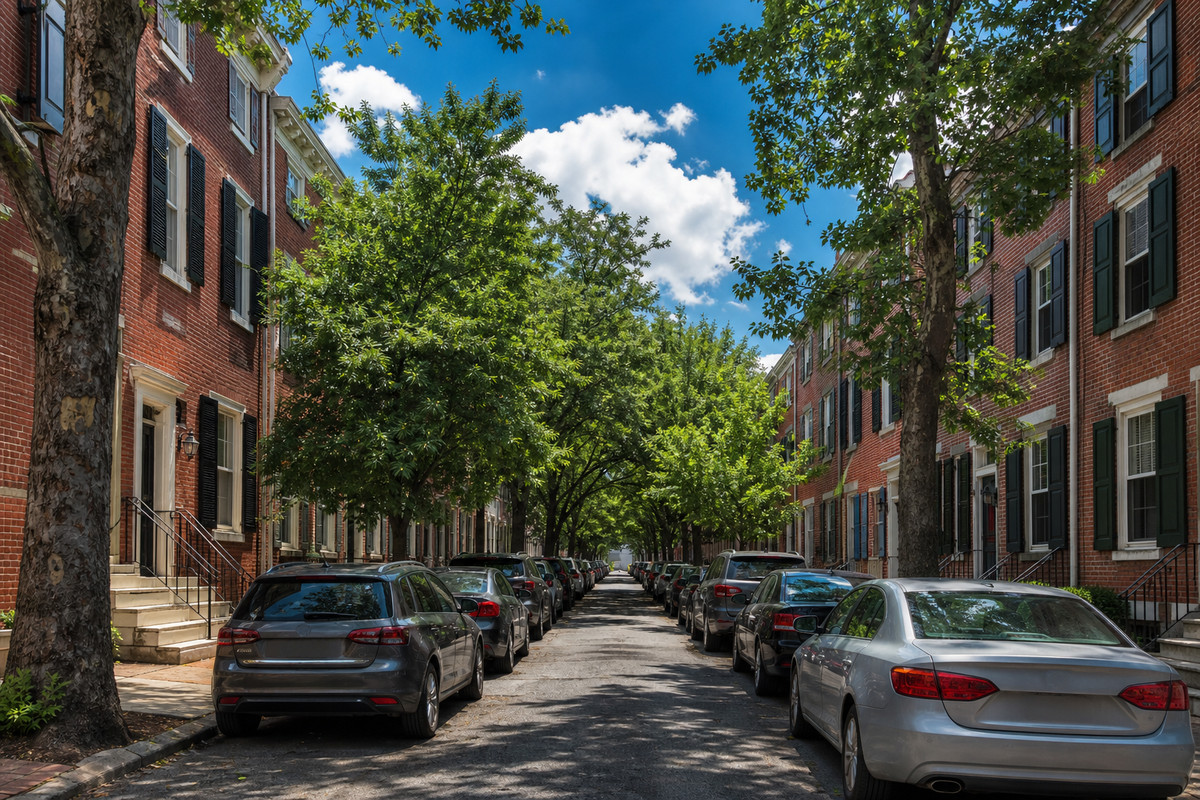
Philadelphia and the Collar Counties
The city, the Main Line, Delco, Montco, Bucks and Chester County.
The Newark depot sits about 86 miles from Philadelphia, and the last hundred feet is the part that needs planning. Philadelphia is a rowhouse city, and its blocks can have cars parked on both sides, no rear access, marble stoops right at the sidewalk, and street trees that were planted when nobody was delivering forty foot boxes. In the older wards you add Belgian block, one way grids and trolley track set into the cartway. Three questions shape a Philadelphia delivery: how wide is the street, is there a service alley behind the row, and how high is the lowest wire or limb over the drop spot, because a tilt bed has to raise its bed to slide a container off. Out in the collar counties the picture changes county by county. The Main Line and the older Montgomery County townships have long curving drives under mature hardwoods, so limb height can matter more than gate width. Chester County is farms, horse properties and the mushroom houses around Kennett Square. Bucks County runs from tight Levittown streets to open ground north of Doylestown. New construction in the collar counties can mean soft backfill over fresh utility trenches, so know where the water and sewer taps run before a box that has to sit level is set. Traffic on the Schuylkill Expressway and the Blue Route can affect the delivery window.
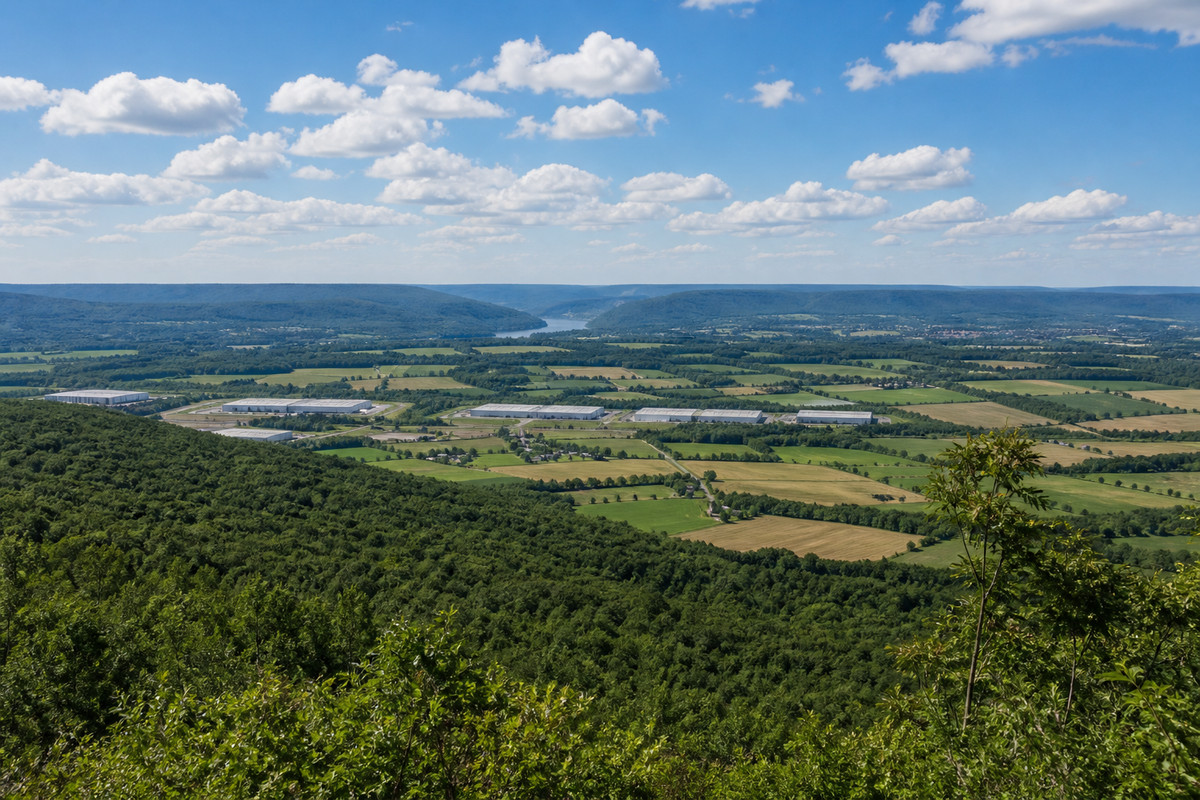
The Lehigh Valley and the Poconos
Allentown, Bethlehem and Easton, out through the gaps into the Pocono resort country.
The Lehigh Valley is about 82 miles from the Newark depot, and its warehouse belt runs along Interstate 78 and Pennsylvania 33. Third party logistics operators, seasonal fulfillment sites and carriers around Bethlehem, Easton and Fogelsville can use yard storage they control rather than paying per diem on somebody else's box. Cement country north of Allentown, around Nazareth, Whitehall, Coplay and Bath, can use containers for parts and belting. Ground here matters, because the Great Valley floor is carbonate rock close under the soil and sinkholes can form in Lehigh and Northampton counties. Mention the site history when you ask for the quote, and block the four corners rather than setting the box straight on turf. North and east of Blue Mountain the land turns to resort and camp country. Pocono resort operators, campgrounds, marinas and short term rental managers can store gear through the off season, ski areas can store snowmaking equipment through summer, and the camp roads back into Monroe, Carbon, Pike and Wayne counties can be narrow, steep and gated. A gravel camp lane that a pickup runs all summer may not take a loaded trailer in March, so say what the last half mile looks like.
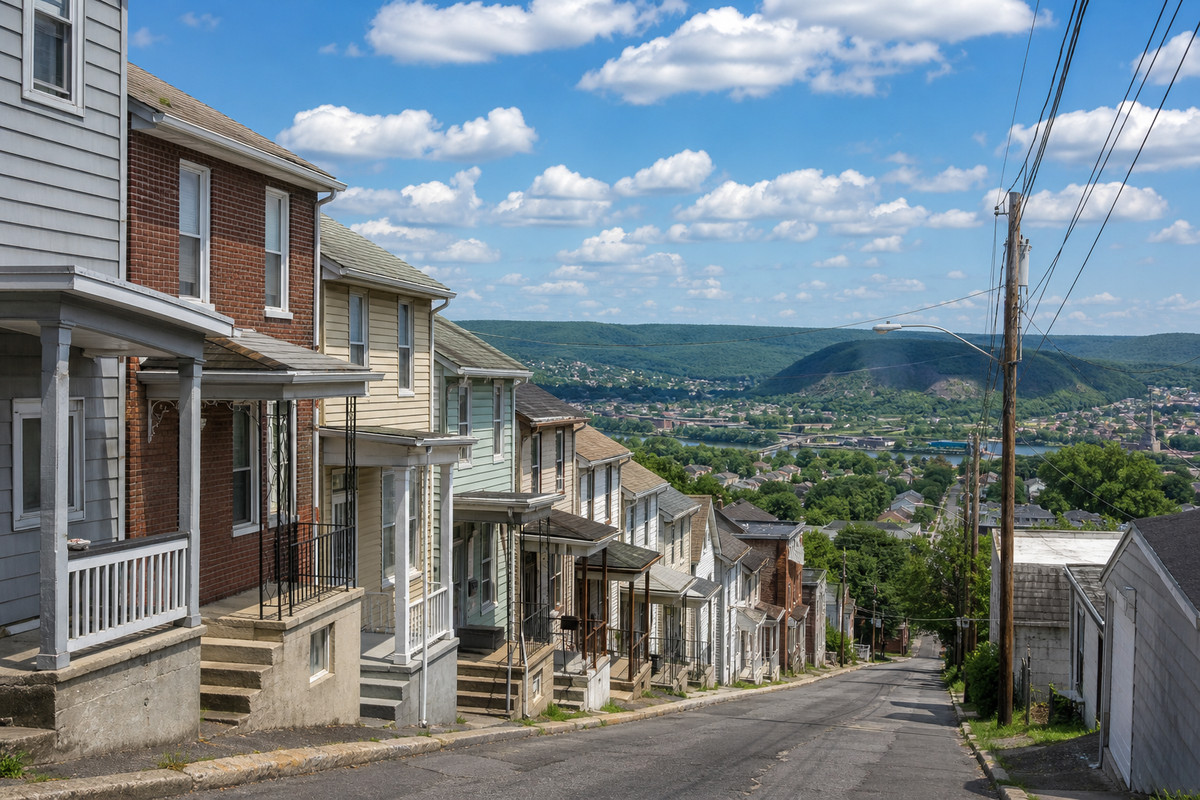
Northeastern Pennsylvania and the Coal Region
NEPA, the Wyoming Valley and the anthracite boroughs. Tight old streets, ground with a history, and a warehouse corridor running through the middle of it.
The boroughs were laid out around anthracite, which means narrow streets, houses close to the curb, alleys instead of driveways, and hills steeper than the map suggests. In Scranton, Wilkes-Barre, Pittston, Pottsville and the Schuylkill County boroughs the alley behind a property can be the only way in, so the alley matters as much as the street in front. This is coal country, culm banks are part of the landscape, and some parcels sit over old workings. The middle of the region is a different business entirely. Along the North Branch of the Susquehanna, through Bloomsburg, Berwick, Danville and Sunbury, the flat ground near the river is good farmland but poor ground for storing, so set the box on higher ground back from the flood plain. The winter freeze thaw cycle can affect a delivery date.
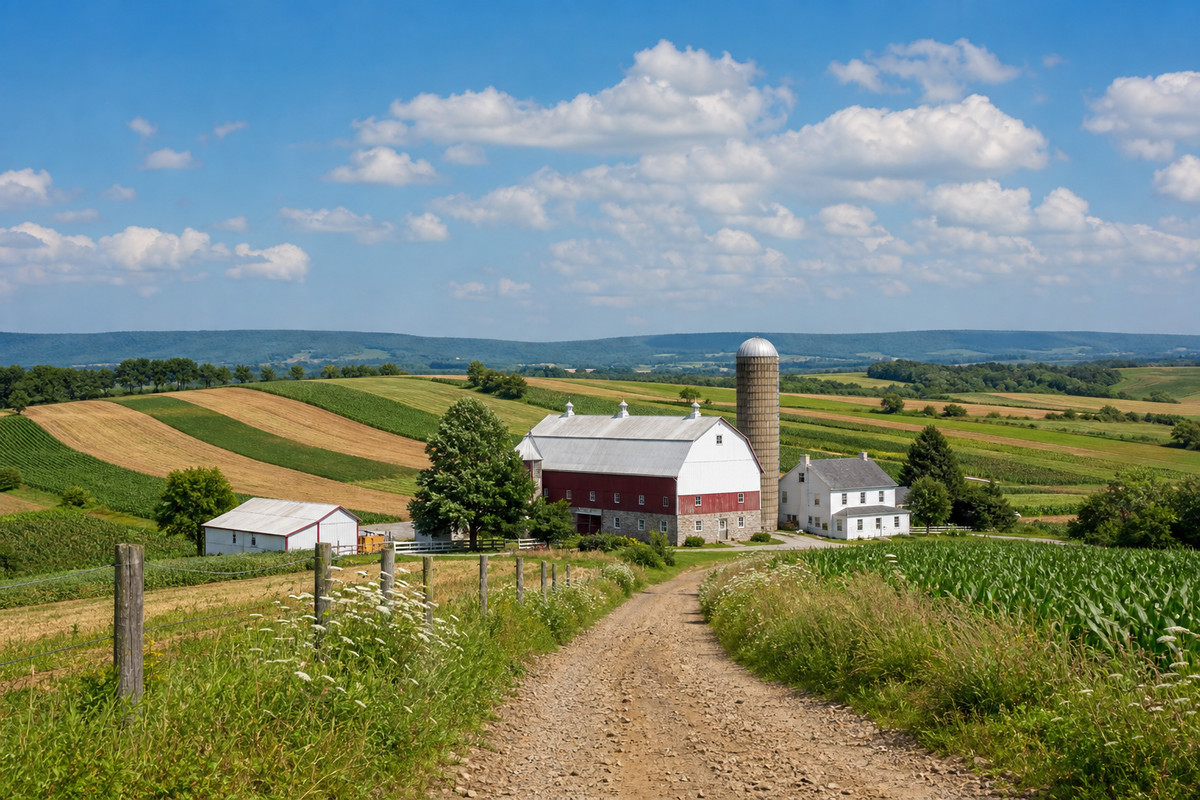
Pennsylvania Dutch Country and the Susquehanna Valley
Lancaster, Reading, York, Harrisburg and the Cumberland Valley.
Limestone ground through Lancaster, Lebanon and the Cumberland Valley drains well and carries weight, farm lanes are built for heavy equipment, and produce auction lots and equipment yards can be packed hard enough to work from. The one ground caution is the carbonate geology under that limestone, because sinkholes turn up in the Great Valley from Reading through Carlisle, so site history is worth raising, as it would be for a septic field. Dairy, poultry, produce and greenhouse operations can use containers for feed, packing supply and equipment. The bank barns that define the landscape have earthen ramps that can take up the only level ground on a lot. Driving through the Plain communities on Pennsylvania 340, 772 and 23 can mean horse drawn traffic, and passing is not always possible. West and south, Harrisburg, Carlisle and Mechanicsburg sit on the Interstate 81 warehouse corridor. York has manufacturing and the snack food belt around Hanover.
Central Pennsylvania and the Alleghenies
State College, Altoona, Johnstown and Williamsport, out through the Northern Tier and the Pennsylvania Wilds.
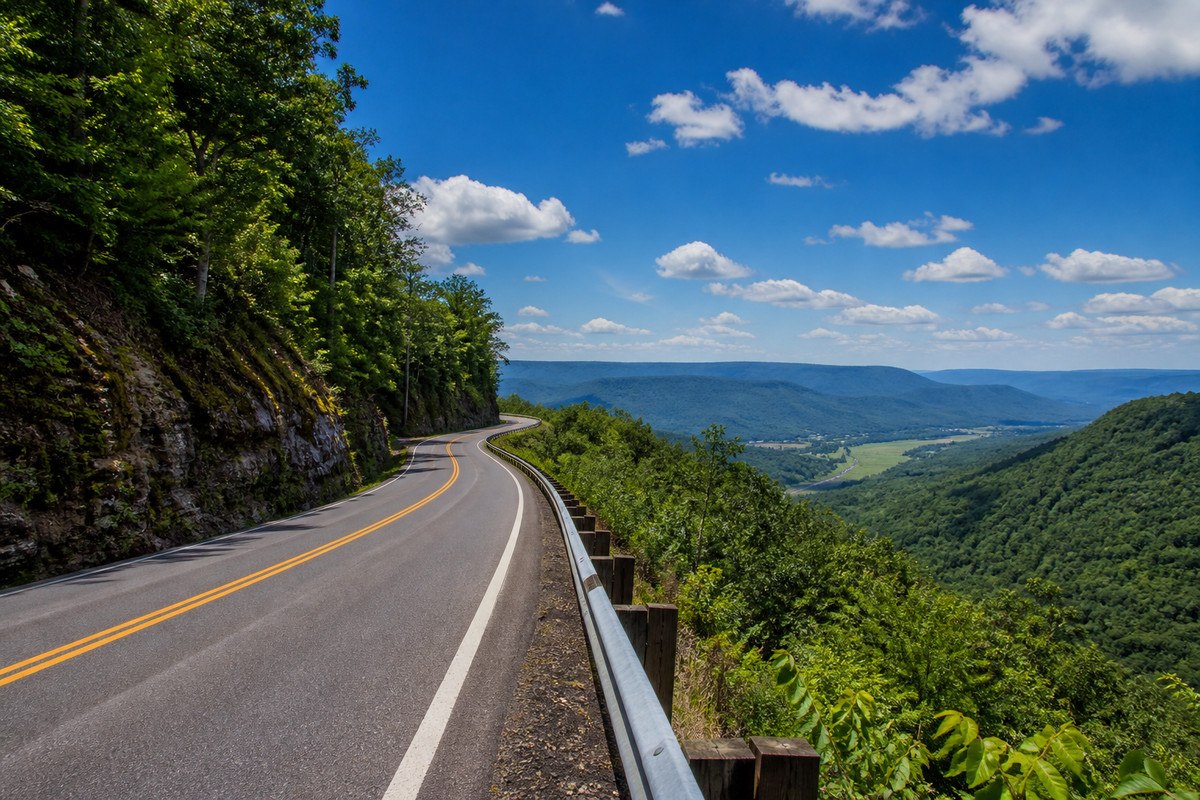
Container One's depots sit at Newark, New Jersey on one side and Cleveland, Ohio on the other, and State College, Altoona, Williamsport and Coudersport sit between them. Container One's Delivery/Dispatch department schedules the date after payment is received and the address and access are reviewed. Rural and small-town sites can have more room to work than the metros. The Allegheny Front is the dividing line for a route: east of it the roads follow the valleys, west of it they climb, and a switchback on a mountain grade is a real constraint for a loaded tilt bed. Above Interstate 80 the map thins out into the Pennsylvania Wilds, where the industries include hardwood timber, powdered metal around St. Marys, and gas in the Northern Tier counties of Bradford, Tioga, Lycoming and Susquehanna. Township roads here get posted with seasonal weight restrictions from late winter into spring, which can delay deliveries during the thaw.
Pittsburgh and Western Pennsylvania
The Burgh, the Mon Valley, the gas counties and the Erie snowbelt.
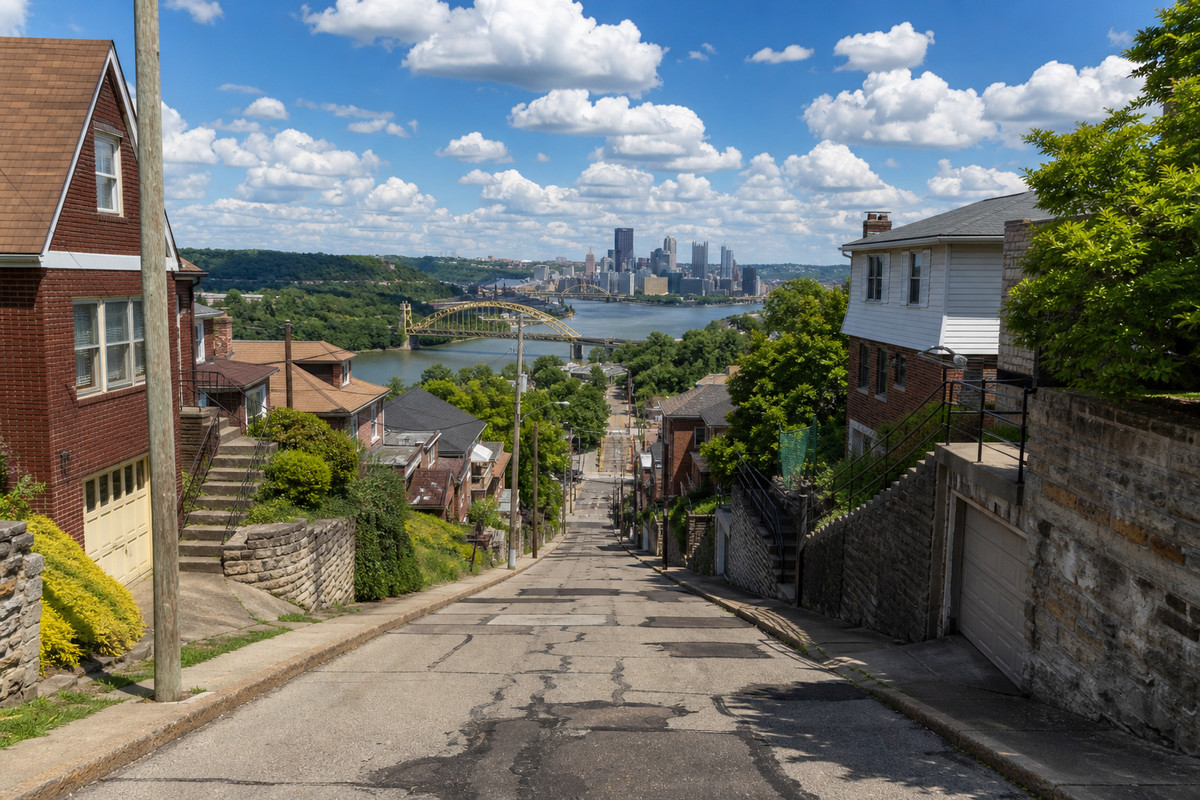
Western Pennsylvania is served from the Cleveland depot, about 132 miles from Pittsburgh. Slope is the main planning question here. Pittsburgh is built on hillsides above three rivers, and a city or South Hills property can have a street too steep to stop a loaded truck on, a garage cut under the house, and public stairways where a street ought to be. Walk the route and note the grade; the Fort Pitt and Squirrel Hill tunnels and the Parkway can also affect routing. Parcels over old mine workings deserve a conversation before a set, not after. The Mon Valley has steel and coke operations, Washington, Greene and Fayette counties have gas crews, Monaca has a petrochemical plant, and the Cranberry area in Butler County has its own mix of businesses; all of them can use storage. Up at the lake, Erie's winters bring heavy lake-effect snow, so face the doors away from the prevailing lake wind and expect winter delays.